




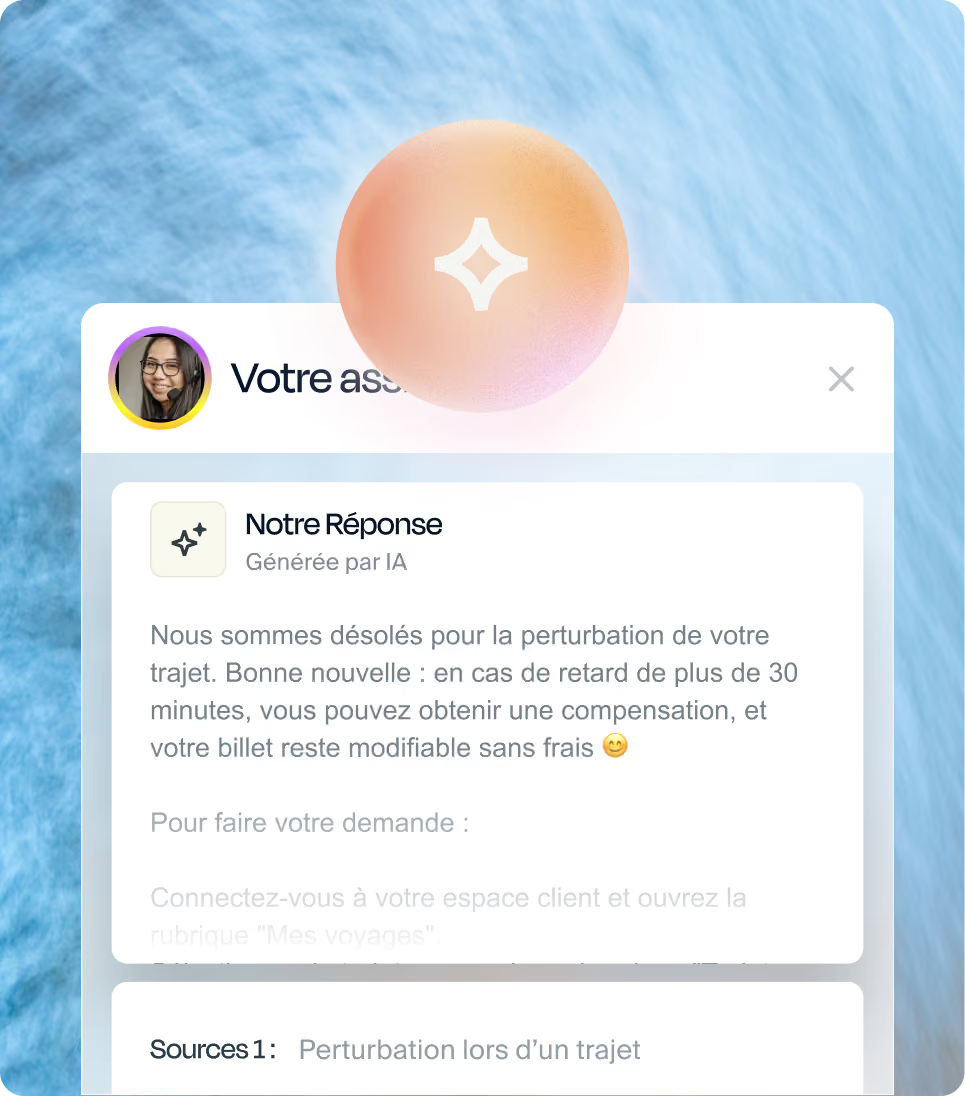

The Script-Based Chatbot
Il suit un arbre de décision écrit à la main. Fiable sur ses parcours, il bute dès que la question sort du script prévu.




Smart Agents is Smart Tribune's customer service chatbot. It responds to your customers 24 hours a day using your approved knowledge base. When it doesn't have an answer, it doesn't make one up—it hands the conversation off to a representative.


A customer service chatbot is a conversational agent that automatically answers customer questions on a website, in an app, or via messaging.
It handles simple, repetitive requests around the clock, routes complex requests to the appropriate channel, and provides the agent with the context that has already been gathered.
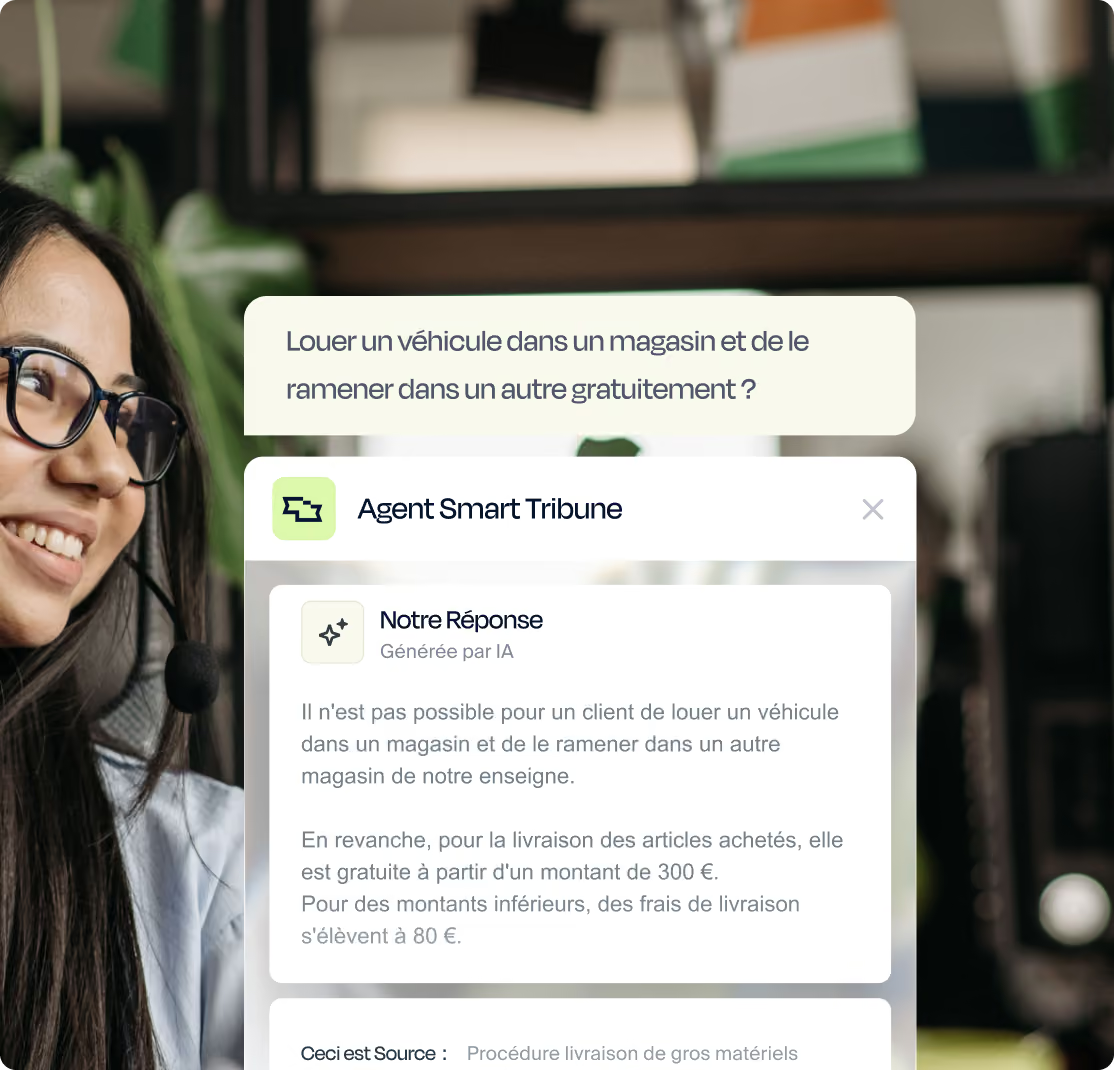
For a customer relationship manager, the difference isn't technical. It's measured in correct responses, in issues actually resolved without human intervention, and in customers' trust in the channel.


Il suit un arbre de décision écrit à la main. Fiable sur ses parcours, il bute dès que la question sort du script prévu.
Il branche un LLM sur vos documents. Il comprend les questions libres, mais peut inventer une réponse quand sa source manque.
Il combine IA générative, arbres de décision, scénarios connectés au SI et relais humain quand la question le demande.
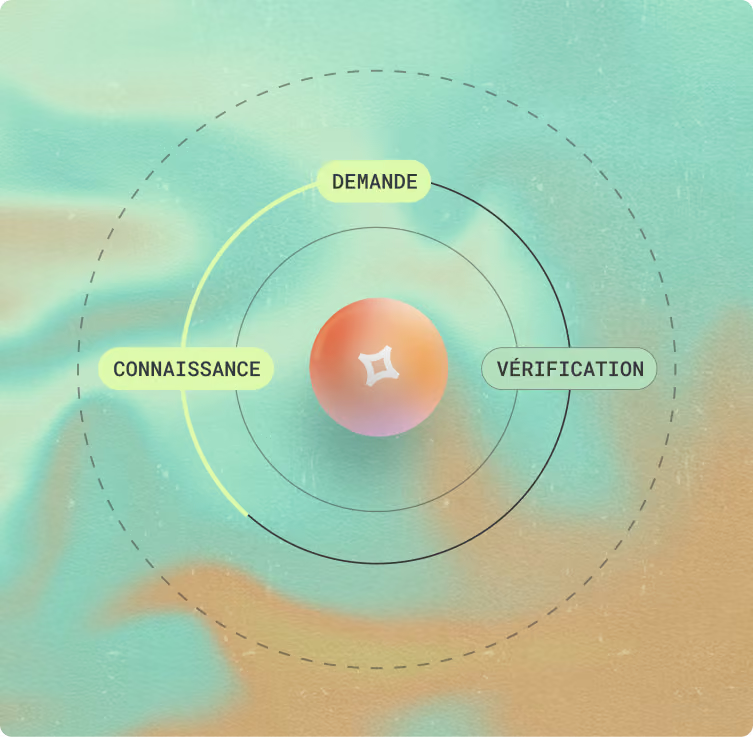
Four key capabilities distinguish a chatbot that resolves customer inquiries from one that frustrates your customers: reliable responses, a hybrid customer journey, access to your data, and continuous monitoring.
Smart Agents generates its responses using Trust AI, Smart Tribune’s agent-based RAG engine. The agent draws only from validated content in your knowledge base and cites its sources. When information is missing, it states so and suggests a consultant: nothing is made up in your brand’s name.
You choose how to handle each type of contact: generative AI for open-ended questions, a decision tree for a procedure, a scenario linked to the information system for customer data, or direct escalation to an agent. A menu first guides the customer, and then the text field opens.

Smart Agents calls your APIs during the conversation. When a customer asks about the status of their delivery, the bot identifies them, retrieves their orders, and displays them along with their status. Order tracking, contracts, eligibility—low-value-added requests are taken out of the agent queue.
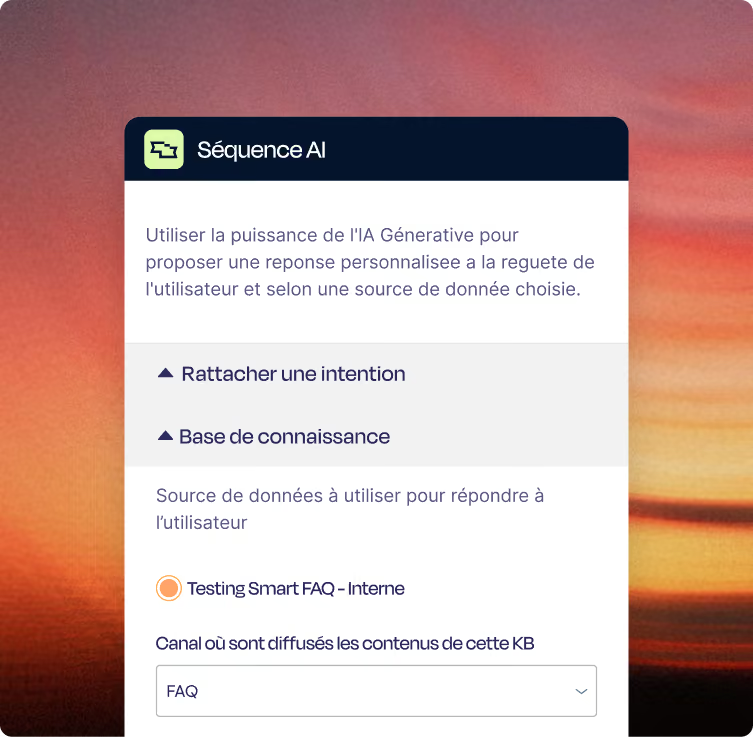
Conversation history, statistics by workflow, and analysis of each AI-generated response show what works and what’s missing. The customer rates each response. An unanswered question can be turned into an article with a single click: the bot also audits your knowledge base.
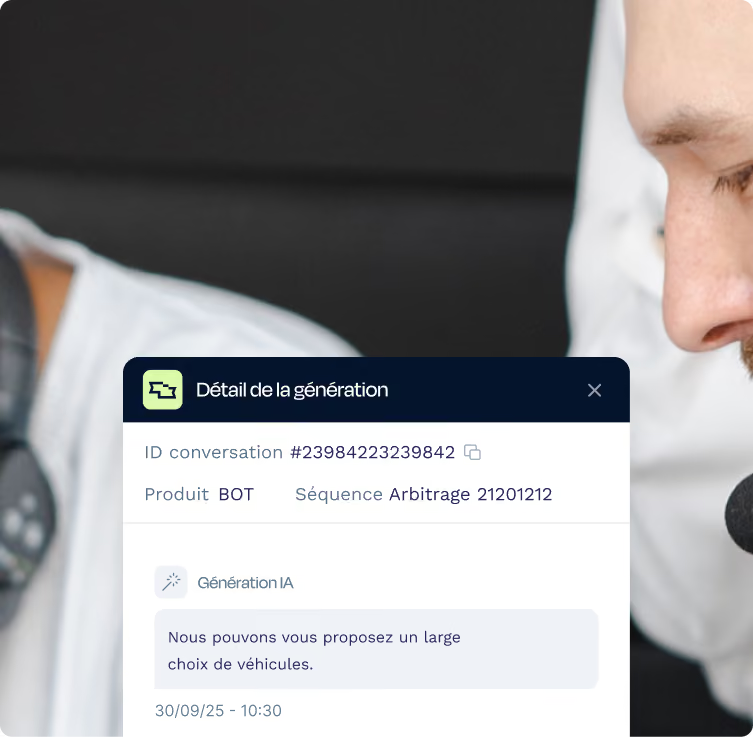

Workflows, intentions, and conditions are built in a visual editor and tested in an emulator before publication.

The bot collects the email address, order number, and reason, then forwards all the relevant information to the customer service representative.

A single bot for multiple languages, with intents and a source knowledge base configured on a per-language basis.

Website, mobile app, WhatsApp, or Messenger, with the option to ask a question via voice message.

Publish to pre-production and then to production, view version history, and restore with a single click.

A fully functional bot can be duplicated with a single click to launch a new brand or expand into a new country.

On a product page or a tracking page, the bot starts directly with the page's intent.

An option disables the retention of messages for sensitive use cases.

A bot with a wide range of customization options. Colors, fonts, sizes, etc.
Smart Agents doesn't replace your knowledge—it enhances it. The process involves three steps.
The same platform powers your dynamic FAQ and your agent knowledge base. Learn more about how it works on the platform page.
Your content (articles, procedures, PDFs, terms and conditions) is centralized and validated in the Smart Tribune back office. Duplicate content, inconsistencies, and outdated content are detected before reaching the customer.
Each question goes through a chain of specialized agents: intent detection, routing and safeguards for sensitive topics, masking of personal data, searching the validated corpus, customization to match the brand’s tone, moderation, and final review.
Conversations, votes, and unanswered questions are included in the statistics. You help expand the database, and all interfaces benefit from this at the same time: the bot, the FAQ, and the agent tools.
Smart Tribune serves more than 150 clients and has deployed more than 600 projects across its entire self-service suite (dynamic FAQs and chatbots).
Carrefour, Ouigo, and Corsica Linea are among the companies that have deployed a Smart Tribune chatbot to complement their help centers.
-40% fewer simple requests
+70% customer satisfaction
Deployment that's twice as fast.
Returns, warranties, refunds, and processing times: The customer service chatbot answers frequently asked questions based on current policy. It understands vague phrasing and can, for example, determine whether a return is still possible based on the receipt date provided by the customer.
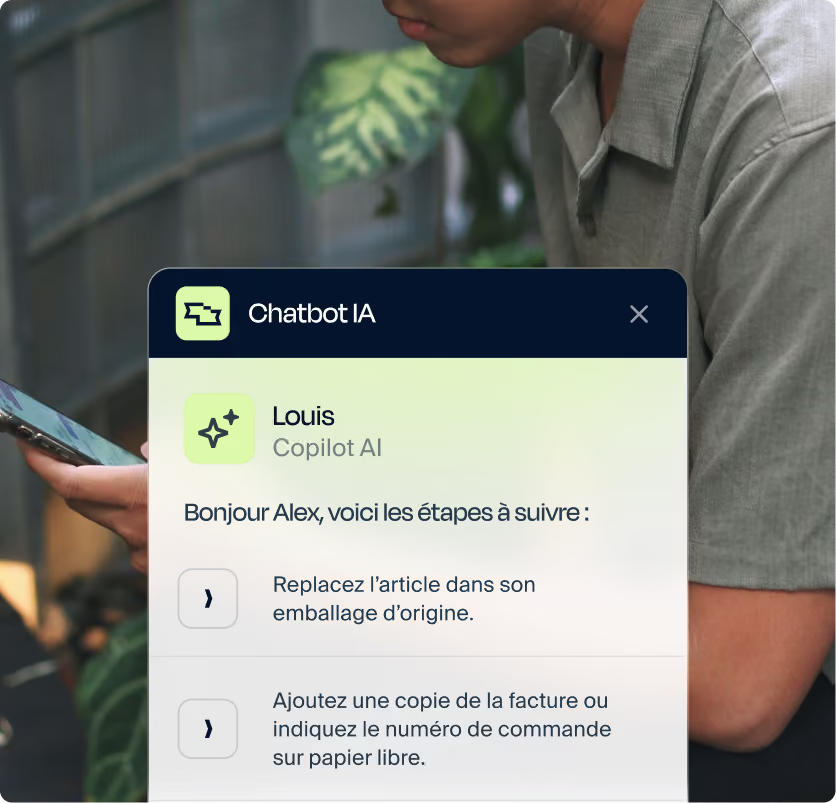

In the evenings, on weekends, or during peak periods (sales, back-to-school season, service disruptions), the bot handles simple requests. For other requests, it assesses the reason and forwards a complete case file to the appropriate advisor.



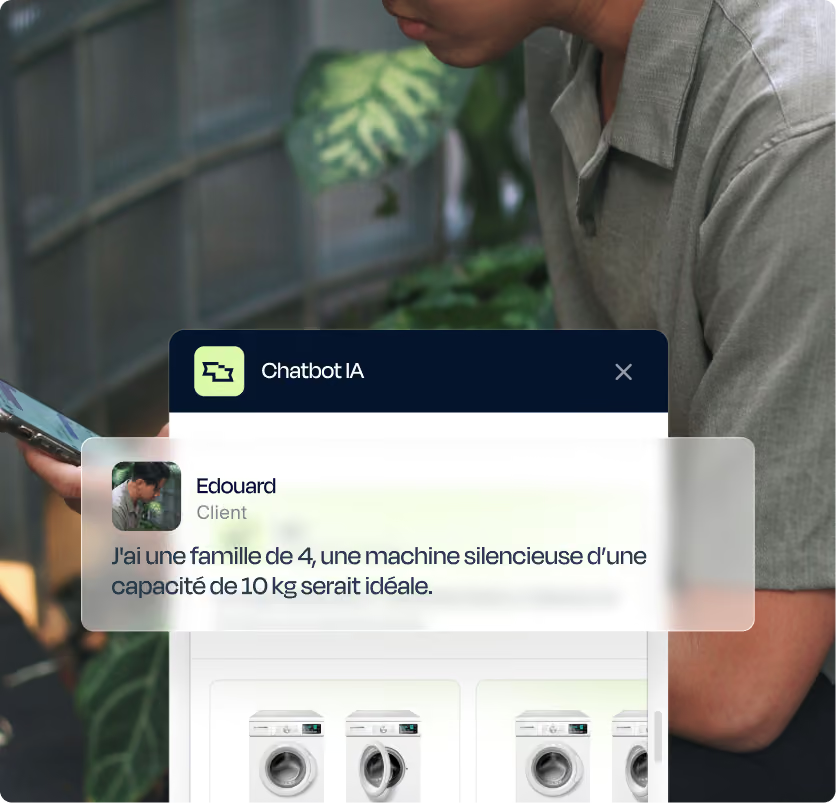
On a product page, the bot answers questions about compatibility or usage based on your product descriptions and buying guides. It starts directly with the page’s intent and uses a hybrid approach for recommendations: closed-ended questions, followed by AI.
Connected to your order management tools via API, the bot identifies the customer, retrieves their orders, and displays their current status. Questions like “Where is my delivery?” no longer have to go through your customer service representatives, even during peak periods.

Before making a purchase, customers look for information that isn't provided in the product listing: compatibility, actual delivery time, and return policies for marketplace items.
The AI agent responds throughout the purchasing journey, citing sources, based on your product content, terms and conditions, and channel-specific rules.
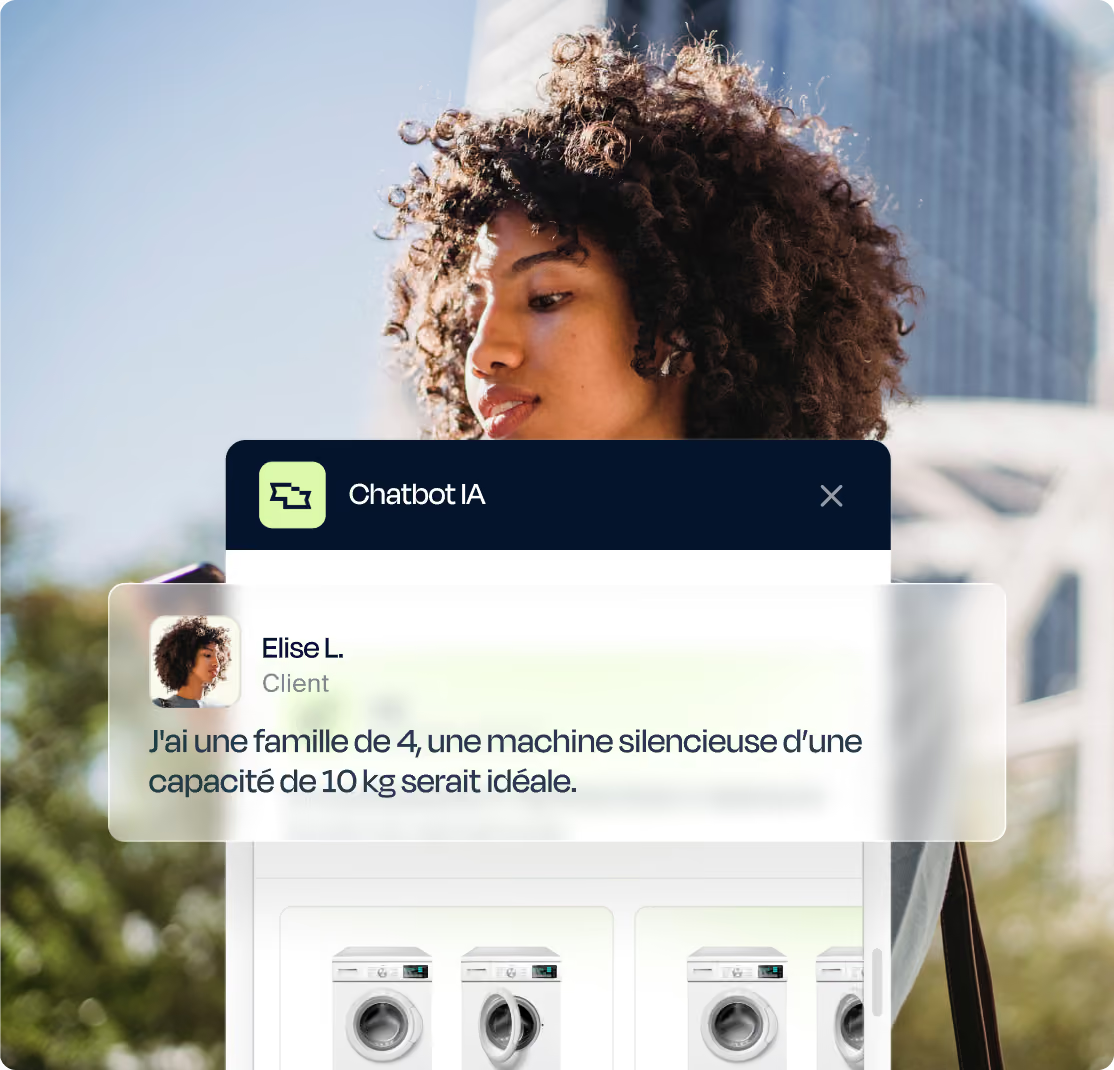
One incident, and the workload doubles in an hour: delays, baggage issues, refunds, and ticket changes. The customer service representatives—often supported by seasonal staff or an outside contractor—don’t have time to pore over a six-page procedure manual.
Self-service and AI agents handle repetitive inquiries, always based on the most up-to-date guidelines. And for complex cases, your agents—whether in-house or third-party—have the same accurate answer at their fingertips, or even suggested automatically.
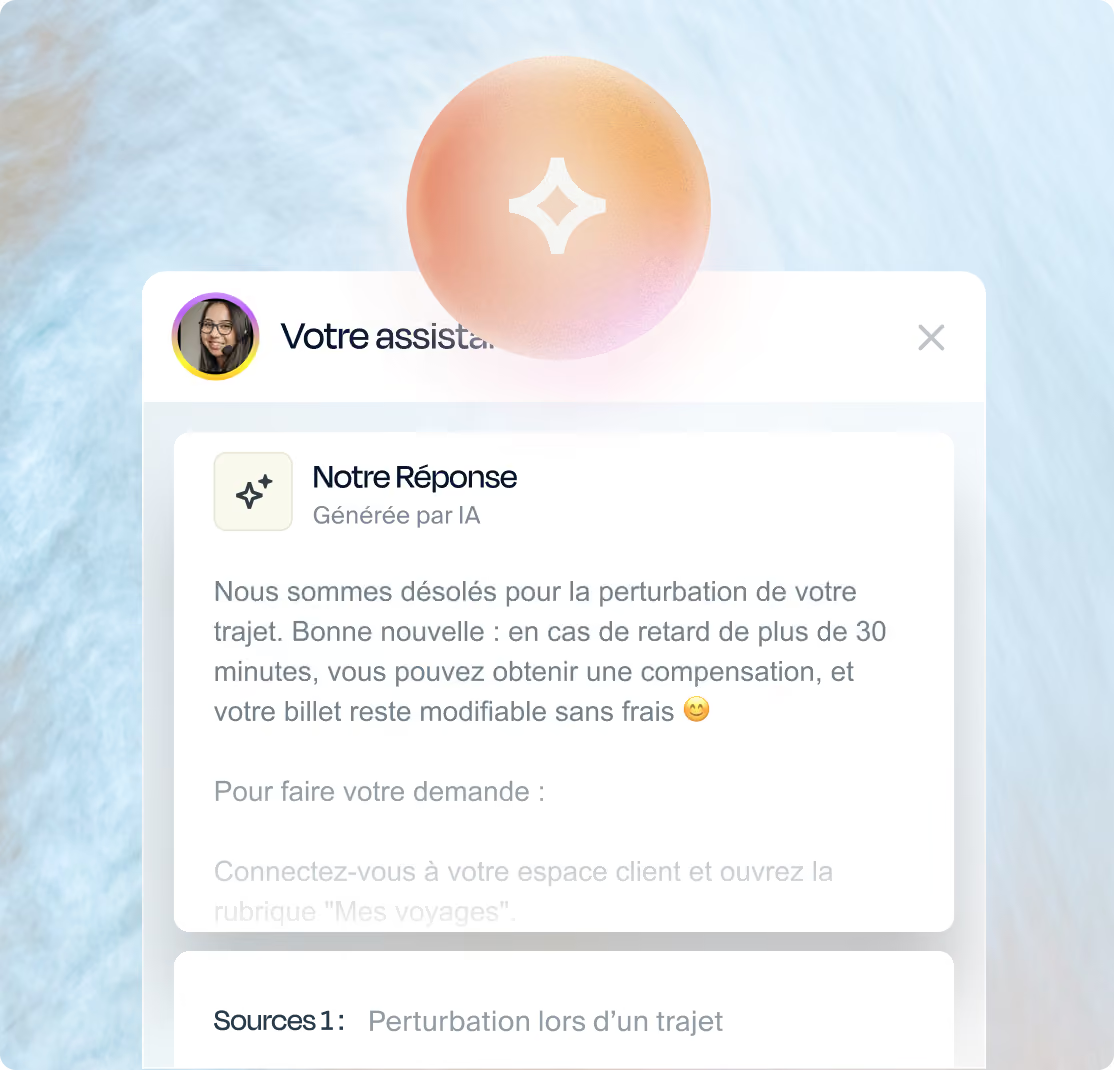
A customer calls twice and gets two different answers. Between regulatory changes, updates to service offerings, and procedures that are managed through shared drive systems, it takes time for information to reach the front-line representative.
The same database powers both the customer self-service portal and the agent workstation, whether in a branch or at the customer service center. Every response can be traced back to the article it comes from, along with its version history. Your service providers have access to the same sources as your teams.
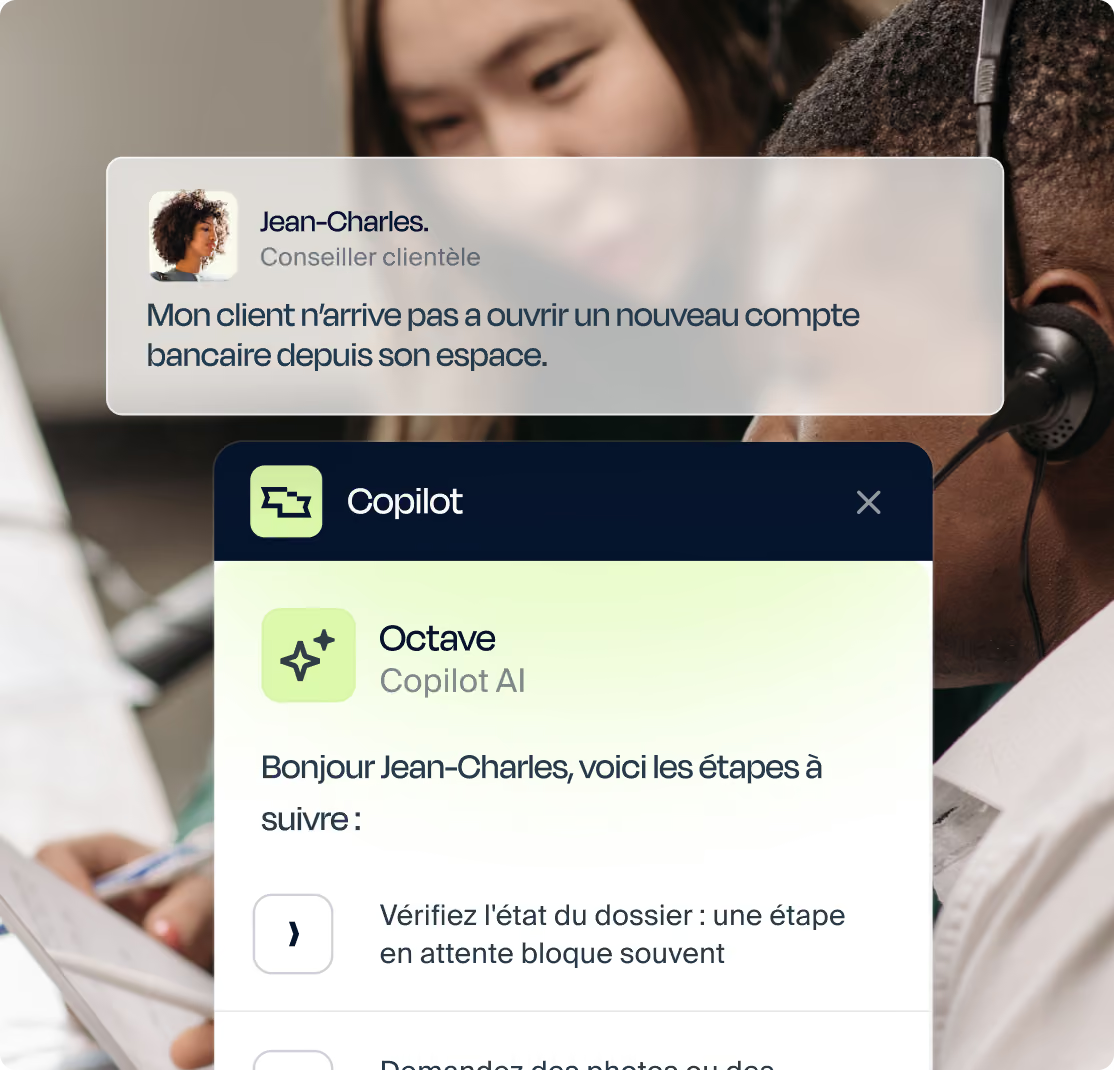
Coverage, exclusions, reimbursements, and claims processing times: whatever the agent says is binding on the company. When each call center maintains its own database and the customer FAQ section operates independently, the policyholder doesn’t always read what they hear over the phone.
A validated database feeds the FAQ, the AI agent, and the manager's workstation with the most up-to-date version of the coverage table. Updates are distributed from a single source and reach branches, the network, and call centers. The manager sees the same information as the policyholder.
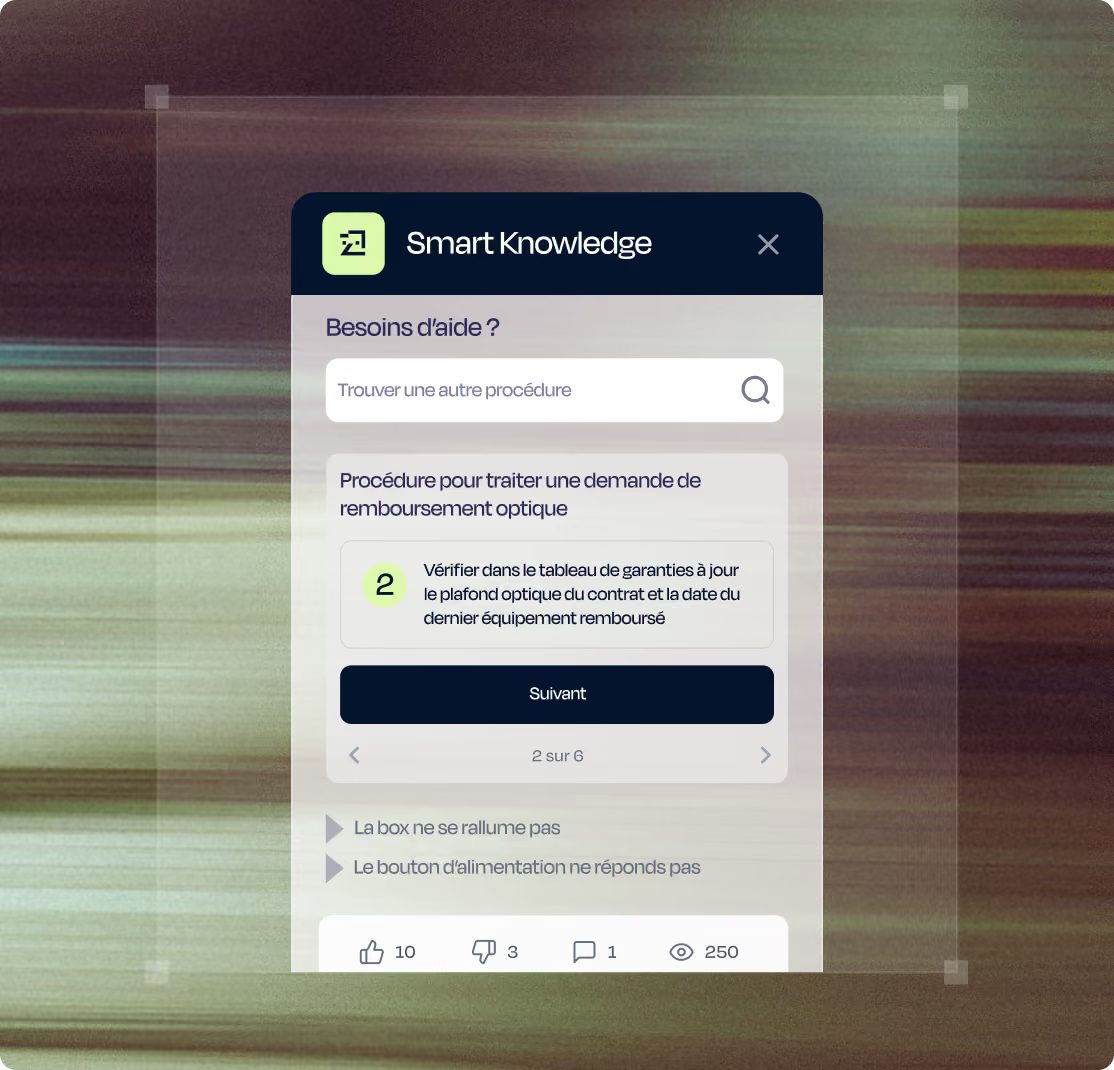
Most chatbot projects fail for the same reason: the knowledge that powers the bot. When the FAQ, the chatbot, and customer service representatives draw from different sources, the customer receives three different answers to the same question. Connecting an AI to scattered, outdated, or contradictory documentation is tantamount to systematizing these inconsistencies.

 Made-up answers when information is lackingThe FAQ, the chatbot, and the customer service representatives contradict each otherThe customer repeats everything to the advisor after the issue is escalated
 Well-sourced answers, or a referral to an advisorA single knowledge base for all your channelsA message that includes the full context of the conversation
At every stage, a dedicated project team supports you: a knowledge project manager, a technical project manager, and a Customer Success Manager. The workshops cover content audits, site architecture, governance, AI tone, and change management.
A limited set of reasons for contact, a single channel, and metrics established at the outset.
New objectives, scenarios integrated with the information system, additional channels, or other languages.
The bot covers all relevant scenarios, managed by your teams.
Before comparing solutions, ask each vendor these seven questions:
Talk to an expert

